Offnominal Enterprises was founded 27 years ago by a small group of engineers who had spent their careers watching good designs fail in ways nobody had planned for. In flight operations, "off nominal" is the term for anything that departs from the expected. Our founders decided to build a company around expecting it.
How we started
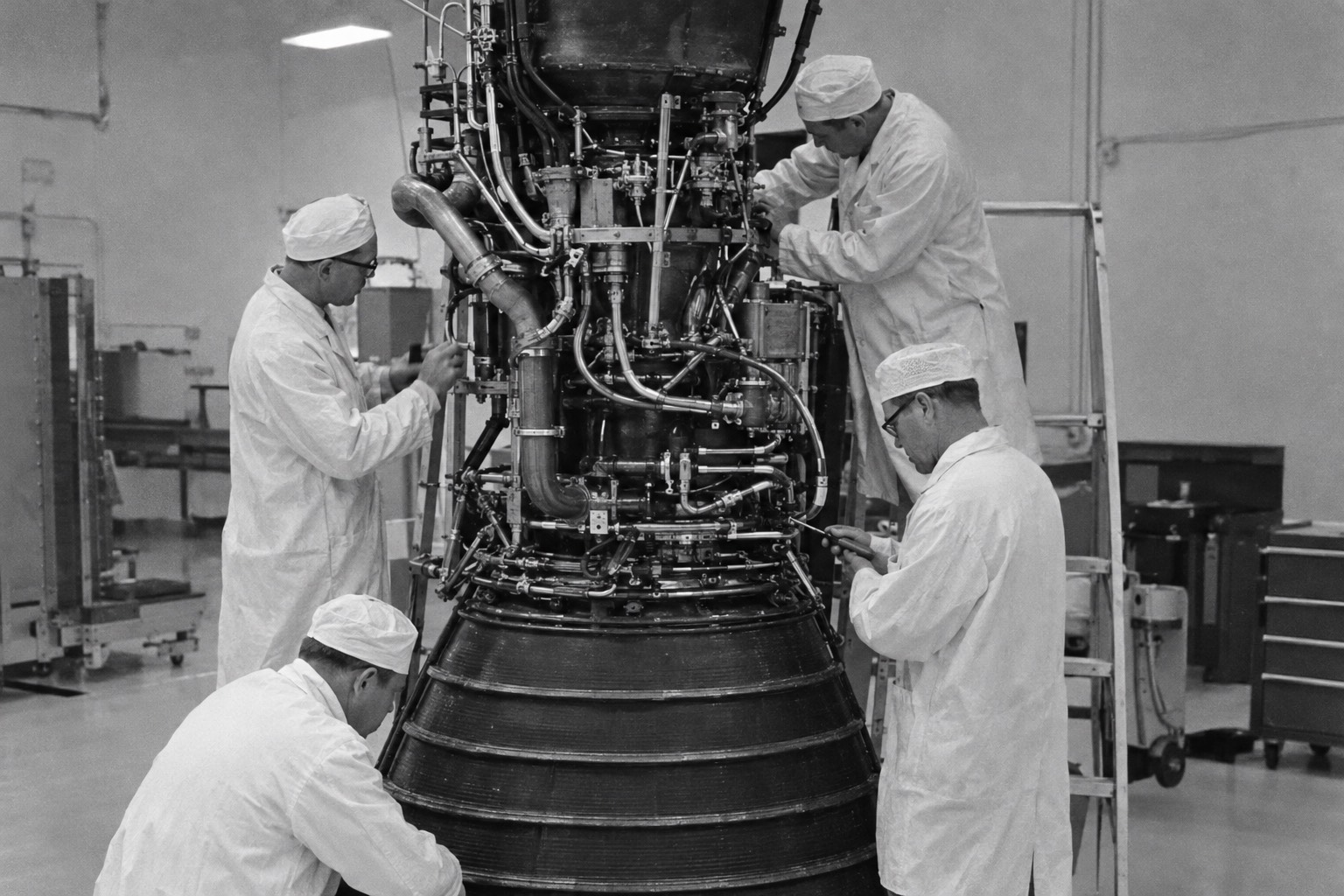
The first Offnominal team worked out of a single test site with one stand and a borrowed control trailer. They took on propulsion work that other suppliers turned down: engines that needed to restart in cold, long coasts and stages that had to survive conditions outside their original specifications.
That work became our reputation. Customers came to us when a mission could not afford to wait for the plan to go right.
Fly what you build
Most aerospace companies hand a system from one team to the next as it moves from design to test to flight. We do not. Offnominal engineers stay with a system from the first test stand to its final orbit.
The engineer who designed a valve watches it fire on the stand, helps integrate it into the vehicle, and sits in the operations center when it flies. That continuity means problems are found by the people best placed to understand them, and lessons from flight go straight back into the next design.
Six sites, one standard
Today more than 1,900 engineers and technicians work across six test sites. Each site has a specialty, from high-thrust propulsion testing to thermal vacuum chambers to vehicle integration, but they share one engineering standard.
That standard covers how we test, how we document, and how we decide something is ready to fly. All five of our programs work to it: Launch Systems, Propulsion, Orbital Platforms, Ground Systems, and Research and Advanced Concepts.
How we work together
Our teams are small on purpose. A propulsion test crew might be a dozen people who know every sensor on the stand by name. Small teams make decisions quickly, and they notice when something looks slightly wrong before it becomes seriously wrong.
We also keep design reviews open. Any engineer can attend a review for any program, and technicians are expected to speak up when a drawing does not match what they see on the floor.
What we believe
We test past the limits because that is where the surprises are. We share what we learn, including the failures, because the next team should not have to rediscover them. And we hire people who would rather understand a problem than work around it.
Engineering at the limits is not about taking risks. It is about knowing exactly where the limits are.